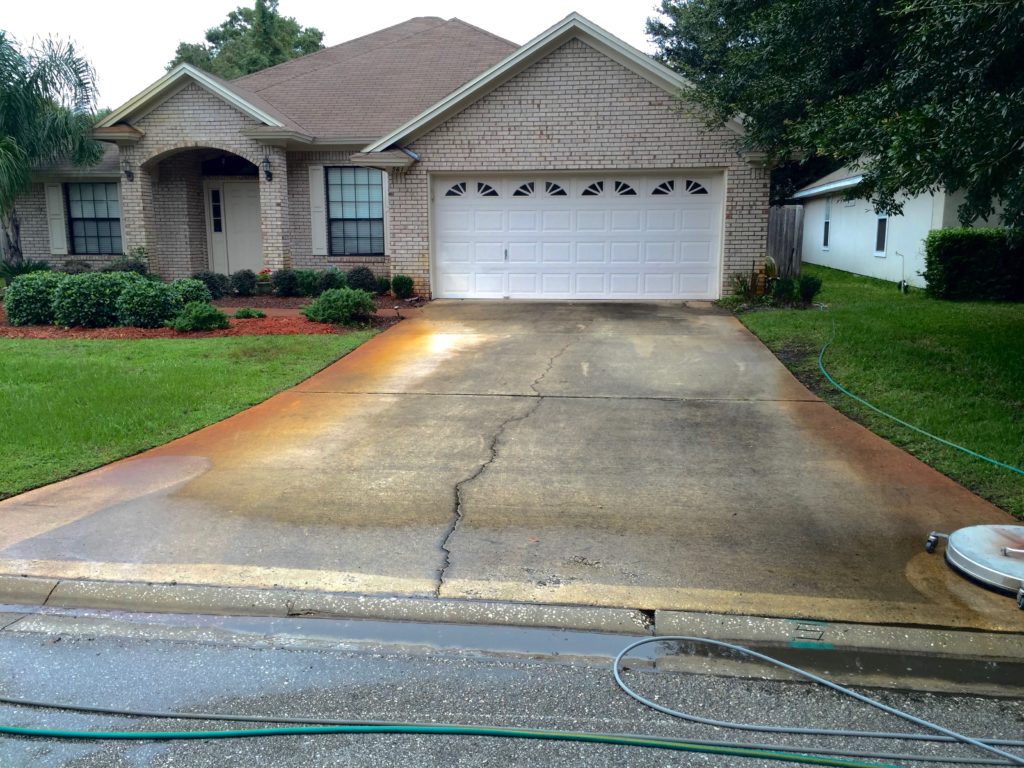
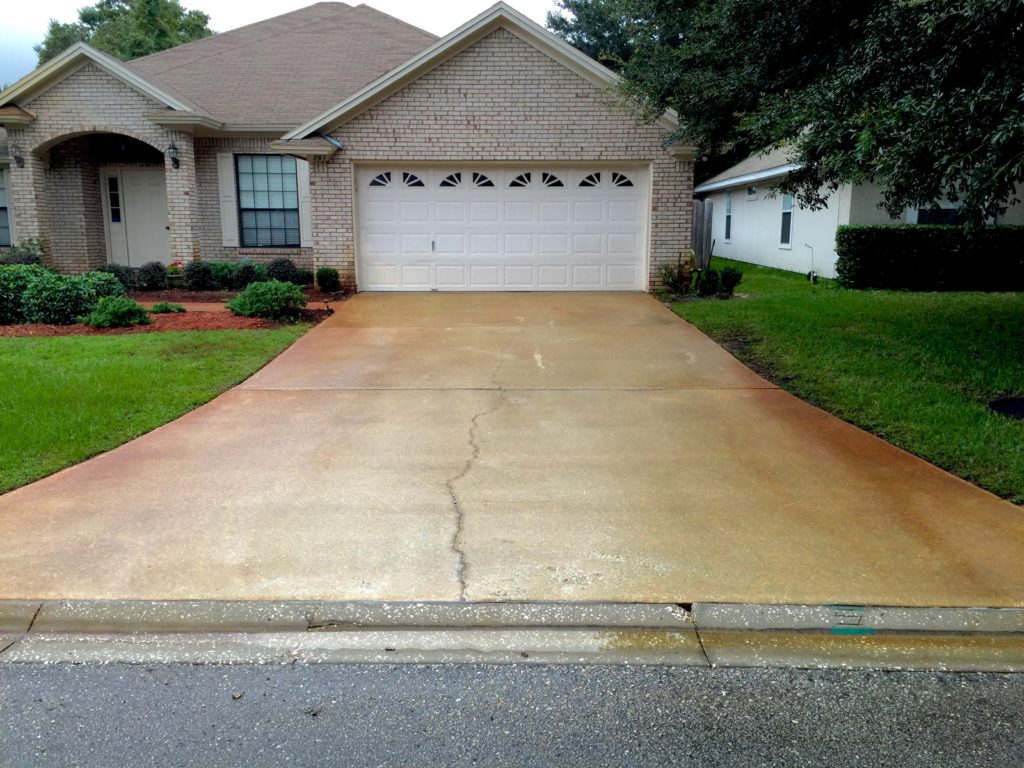
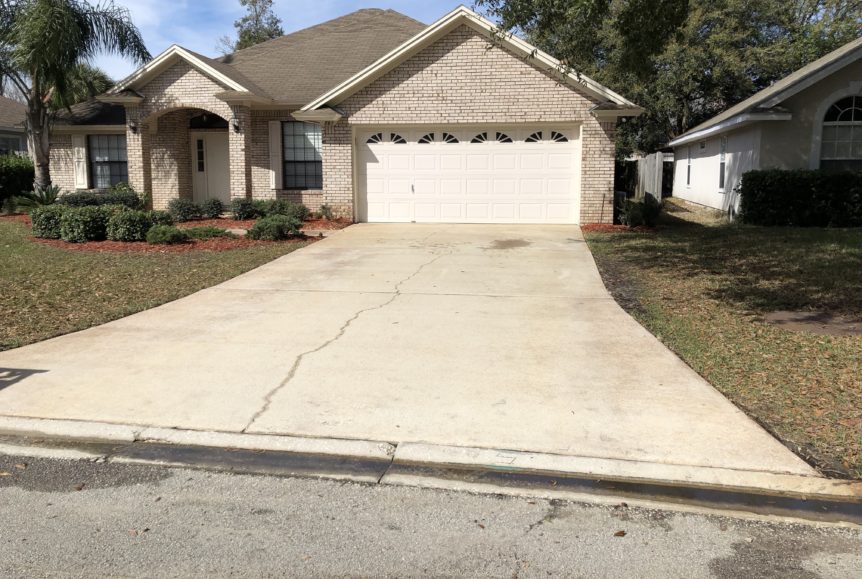
Removing rust stains generated by automobile battery acids, lawn fertilizers, and Irrigation wells can be challenging. Iron minerals applied to any material over time will start to show a brownish orange rust color. Not all wells contain iron, but the ones that do are easily noticeable after irrigating for short periods. The appearance of your homes exterior concrete, pavers, fencing, or walls will continue to stain deeper and darker in color. If you need help please inquire about our rust removal service.
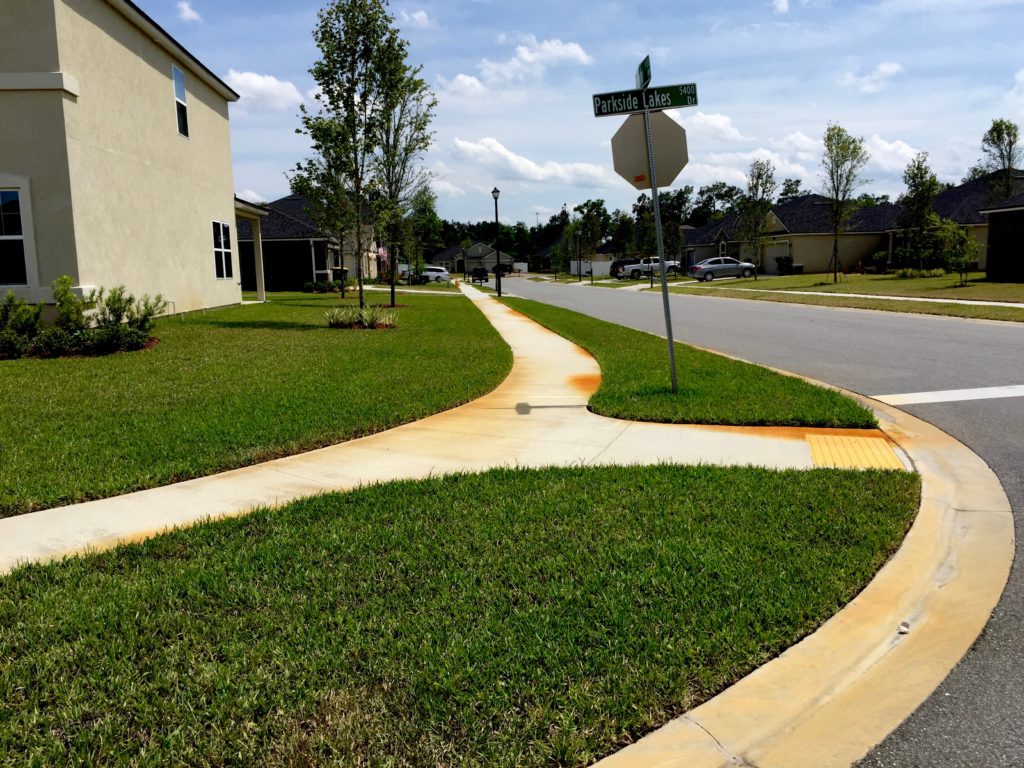
The picture below shows an old neighbors sidewalk (less that one year old). This homeowner installed an irrigation well to water his grass and after a few weeks of watering this was the result.
Instructions on how to remove rust yourself at home
Step 1: You must be able to follow directions. If you are a “shoot from the hip” type person my recommendation would be to hire a pro. Use common sense. You should be using proper personal protective equipment (P.P.E) like eye protection, respirators, gloves, long sleeve shirts and pants. My recommendation would be to hire a professional and not to try it at home yourself.
Step 2: Pressure wash the rust stained areas. If you have rust on pavers or concrete and even though it’s not dirty you have to pressure wash it first. This goes back to step 1 being able to follow directions. The naked eye cannot see an ever so slight layer of dirt, mold, oil or grease. Pressure washing will clean off the top layer of grime and open up the pores so that you are exposing the Iron. If the rust your treating is on your fence or homes siding I recommend you softwash it with low-pressure water first followed up by a thorough rinse.
Step3: Allow area to completely dry. If it’s sunny and hot it wont take but 15 to 30 minutes. If it’s overcast and cloudy you might have to wait an hour or more.
Step 4: After substrates are dry make 2 spray bottles one with water and another with your rust cleaning chemical. Make sure to dilute the rust cleaner per the manufacturers application instructions. Most rust removers recommend starting out 20:1 or 15:1 rations (Parts water to parts chemical)
Step 5: Pre-wet the rust stained surface with water bottle set to the spray setting. Lightly mist the water onto the area you wish to treat. Do not soak the area with your spray bottle just mist it to lightly dampen the substrate. Next take your spray bottle with rust remover and spray the stain with your solution making sure not to over applicate and create drip lines that will run down your driveway of exterior walls. If spraying on a vertical application ensure you are watering the unstained areas directly below the stain with your garden hose. Rust chemicals will alter your paint finish so you do not want the rust cleaner dripping down areas that are not in need of rust cleaning. Never treat a rust stain directly above a glass window. Rust remover chemicals will destroy glass clarity and leave a rainbow haze on the glass itself. (I know pre-wetting sounds stupid but pre-wetting helps to keep the rust cleaners up on the top surface layer. You don’t want bone dry substrates sucking down acid deep into its pores) Most rust stains are located on the top layer of the surface your cleaning.
Step 6: Allow the rust remover chemical application to dwell per the manufactures instructions. Do not let rust remover completely dry on the surface. Use agitation as necessary to work the chemical into the substrate. After a few minutes thoroughly rinse and/or lightly pressure wash the surface. Allow to dry completely and assess results.
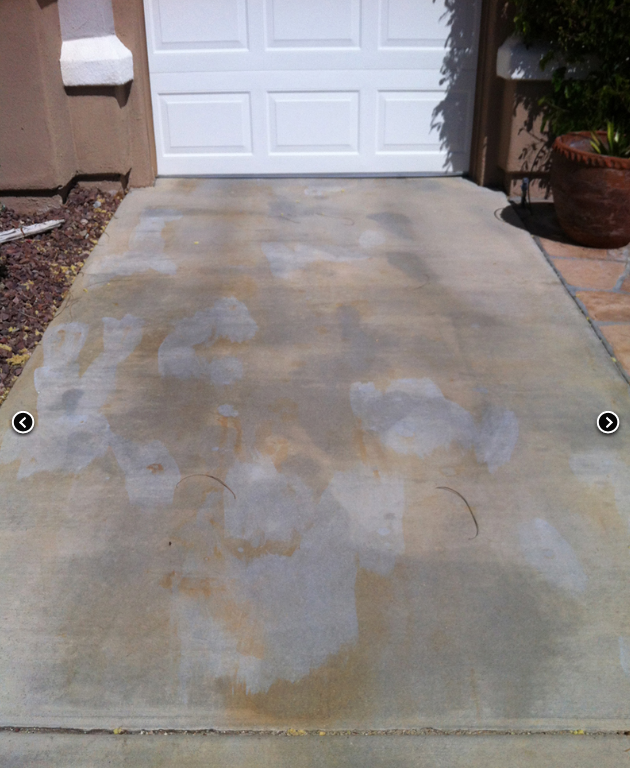
Step 7: After completely drying make note of the visual improvement. You can alter your rust cleaner-to-water ratio if you need a stronger solution. Just make sure you’re following all the steps above with each treatment. If you allow the rust cleaner to dry you will be left with a white stain or lighter color that will not be uniform adjacent to the areas you are cleaning. Look at the image below where someone tried to remove rust on their own. If you are not following instructions you are going to be left with the same results at your house.
Preventing Rust:
Outdoor metal patio tables, chairs, BBQ grills will eventually leave rust spots on your exterior hardscapes. As new finishes over metal wear down over time they will leave rust stains on the surfaces they reside. Placing your grills on pads and patio furniture on outdoor rugs work great. If rust’s coming from the irrigation well you can purchase separate “Add-On” devices that filter and helps remove the iron minerals. This option requires a monthly maintenance activity of adding a powder mixture to to this device, which can become quite expensive. If you fail to replenish the iron reducing powder each month then you are going to start to see rust. Make sure to install your rust prevention devices before requesting our rust removal service.
The first solution to removing rust stains is identifying the source of the rust problem. There is no quick fix chemical to remove the staining left behind by rust. Purchasing and applying every big box store rust remover out there left me with no choice but to explore commercial products. Some commercial and box store products do remove rust from smooth finishes like vinyl fencing, siding, or a painted surfaces. If you attempt apply commercial rust removers to concrete, pavers, stucco or any other porous surface you will most likely burn in a white spot over where the orange stain use to be.
Paying A Pro to Remove Rust:
Most customers do not know they have a rust problem until after their concrete has been professionally cleaned as dirt and mold will hide the rust. Spot treating rust stains will not provide a quality uniform finish. Rust removers are acids and change the color of just about everything they touch with the exceptions of plastics. If there is rust staining from overspray of sprinklers it’s impossible to blend the colors into the unstained areas. If you have just a small rust spot on your driveway then a spot treatment might make sense. Spot cleaning larger stains leads to a noticeable difference in the color of the concrete.
If you have rust all the way down the sides of your driveways and sidewalks then it is recommended to treat the entire driveway or sidewalk to achieve UNIFORM results. Rust removal for a standard four car driveway can cost about $700 to $1,000. The Pressure Kru doesn’t recommend paying to remove rust unless the rust causing issues have been addressed and removed.
The images below are from a customer that wanted their driveway pressure washed to remove the rust. After reviewing the options, the homeowner wanted the driveway pressure washed, declining the rust removal service. Most homeowners don’t agree with purchasing additional equipment, installing that equipment, or having to spend $50 a month on adding powders each month.